My Mountain
by Nan Carlton
Location, location, location.
When showing a property to prospective buyers, realtors often use this maxim to emphasize the importance of a locale’s prized geography and surroundings. But the phrase has a slightly different usage and meaning when I have the occasion to reflect on, catch a glimpse of, or stand atop a certain summit in my childhood hometown.
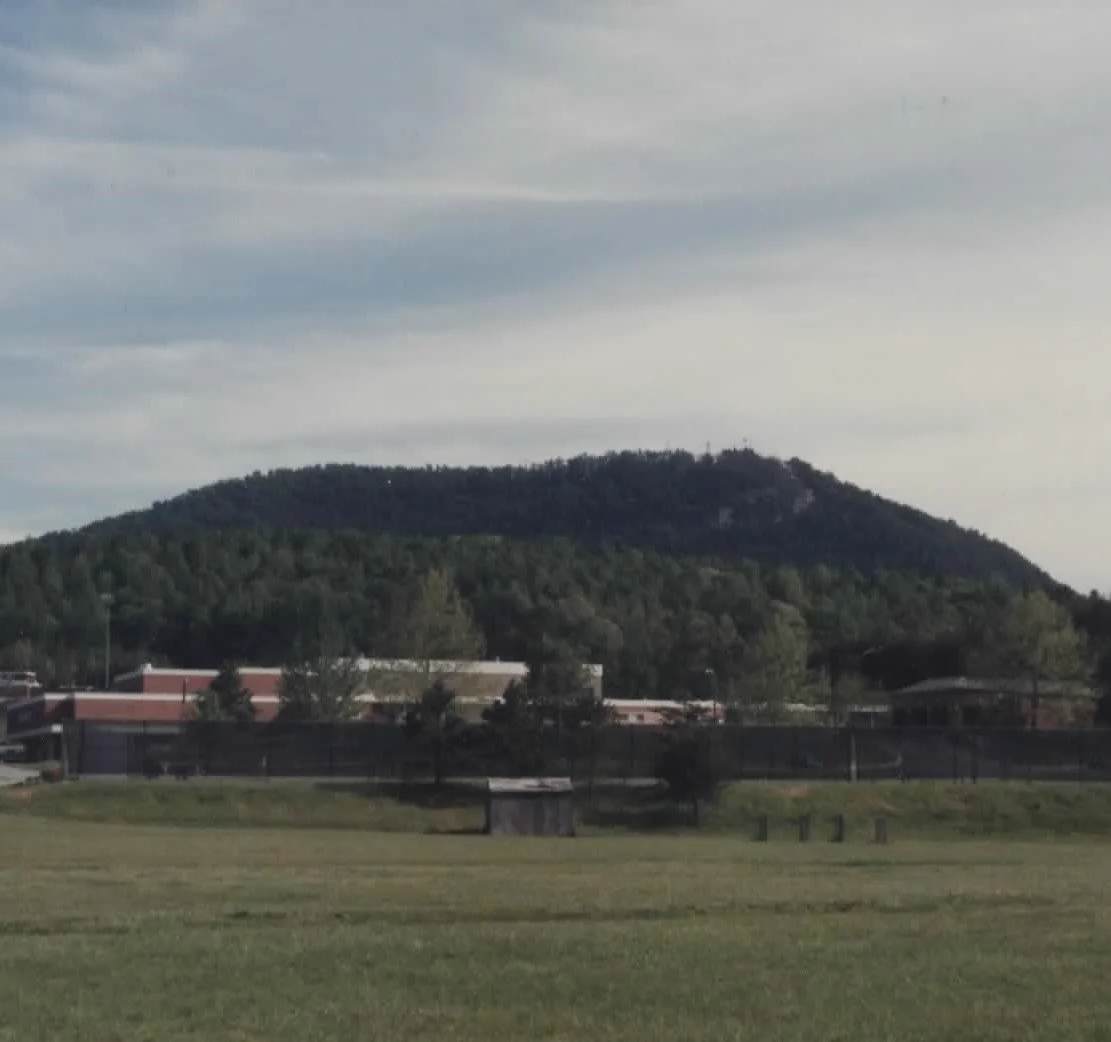
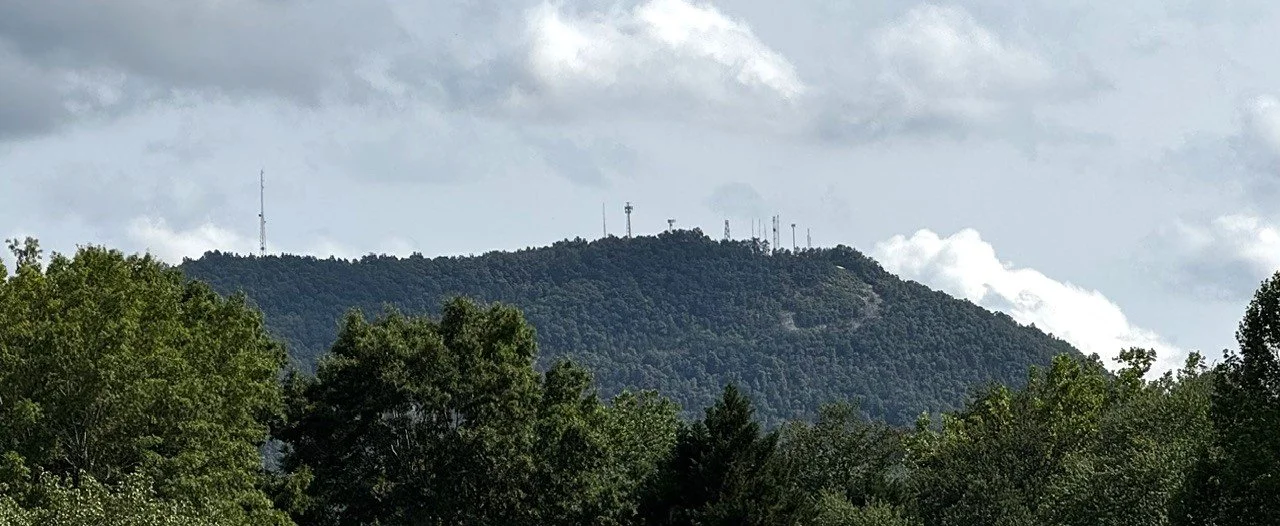
Hibriten Mountain. Location: five miles east of the small city of Lenoir, North Carolina, the westernmost point of the Brushy Mountain range, and a parallel ridge to the Blue Ridge Mountains. Elevation: 2,211 feet above sea level. GPS coordinates: 35.90749° N, -81.48946°W.
My mountain.
And I suppose, my favorite place on God’s earth.
Oddly enough, this beloved, innocuous highland has a tendency to spark a couple of—how to best phrase this—for the sake of decorum, let’s call them “lively discussions” between Caldwell County residents and those who fall into the category of visitors, tourists, or topographers. If I’m being completely honest, these so-called discussions often rise to the level of dogged disputes, the ongoing aftermath of which often appearing in the editorial section of the town’s newspaper.
The first point of contention relates to the correct pronunciation of the mountain’s name. The second syllable is typically the problem for newcomers, with the most common mispronunciation resembling something akin to High Britain. However, both “i’s” in this proper noun are long “i’s.” Exactly how should folks pronounce Hibriten? Phonetically, HIGH-bri-ton is correct, with the accent on the first syllable and the second syllable, bri, pronounced with a long “i,” as in bright.
Secondly, there’s the nagging issue as to the veracity of the claim that Hibriten is, in fact, a mountain. With an elevation of slightly less than one thousand feet above the surrounding terrain, the U.S. Board of Geographic Names (GBN), for years, classified this peak as a hill, not a mountain. (A designation totally ignored by the locals, I might add. Seriously, what difference does a couple of feet make?) But in the mid-1970s, the GBN wisely (choice of adverb reflects the author’s opinion) abandoned the former 1,000-foot benchmark required to officially attain the status of “mountain” and elected to make no distinction at all between a hill and a mountain. Smart move. Case closed. No need for any further discussion (or debate) about this trivial matter of elevation. It’s Hibriten Mountain—always has been, always will be.
I’m not alone in my love for this mountain. Bridging the gap between the from-here crowd and the come-here group, this prominent landmark has inspired countless painters, photographers, writers, and musicians for over two hundred years to use their creative talents to express admiration for and interest in Hibriten.
So, why do I (and countless others) claim such an affinity for a modestly raised spot on the ground? Why do I (we) never tire of gazing at this lofty parcel of land. Stick around long enough in these parts, and the reasons for the aforementioned preoccupation become abundantly obvious.
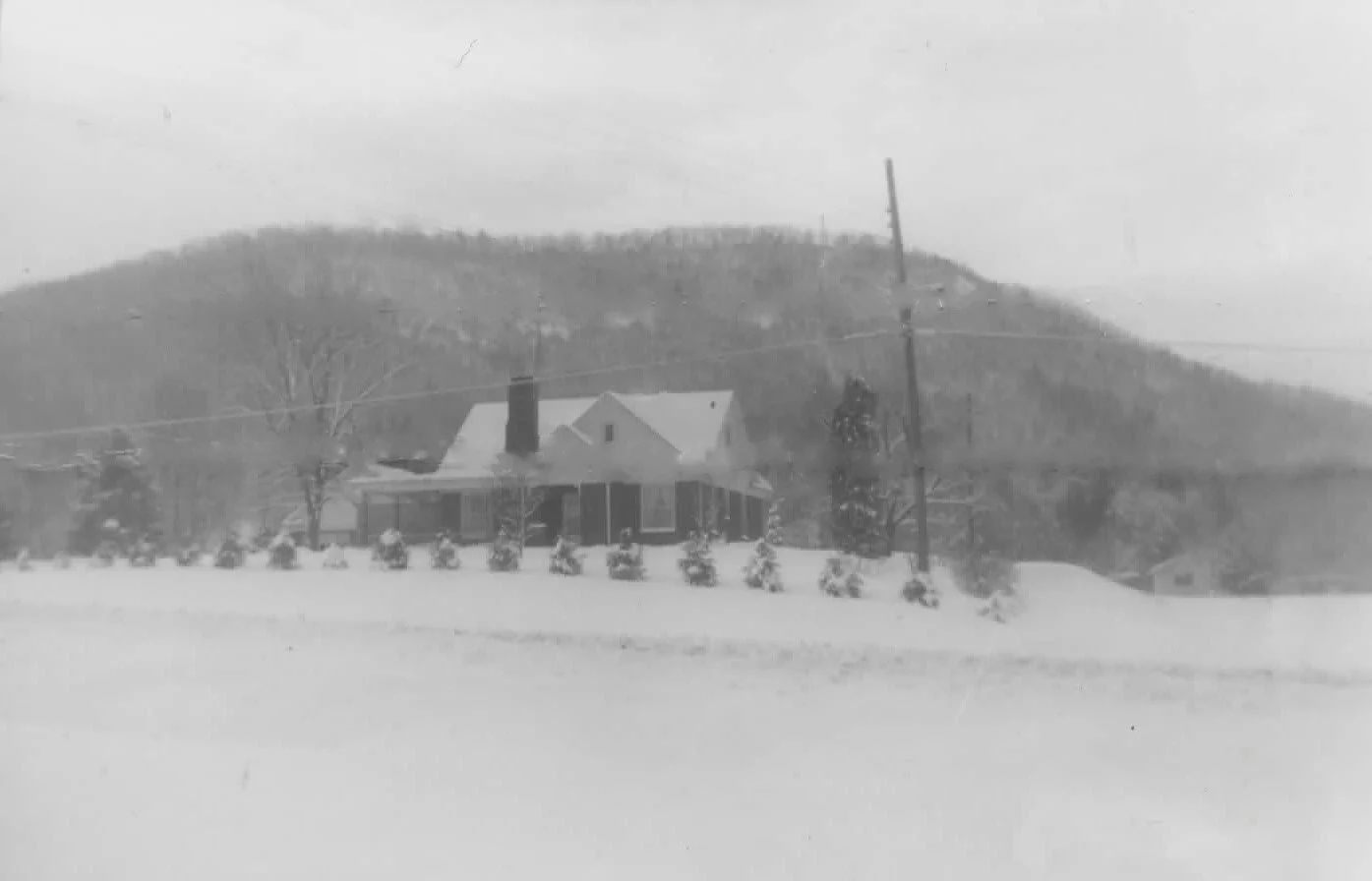
The mountain reveals an unpretentious beauty each time the seasons change. Announcing springtime is nigh, fluorescent green leaves burst forth on its sassafras, mockernut hickories, red maples, and tulip poplars. Each summer, deciduous trees, with their deep, hunter green leaves, intermingle with native evergreens, mostly white pines, Eastern red cedars, and Virginia pines, and envelop the mountain’s slopes with a lush, inviting canopy. Here, locals and passersby enjoy breathtaking displays of mottled shades of reds, oranges, and yellows in the autumn months. And in winter, fortunate onlookers witness blankets of clean, white snow covering the barren mountain and providing a scene worthy of gracing the front cover of a Christmas card. To borrow a colloquialism, Hibriten Mountain is a sight for sore eyes—every day of the year.
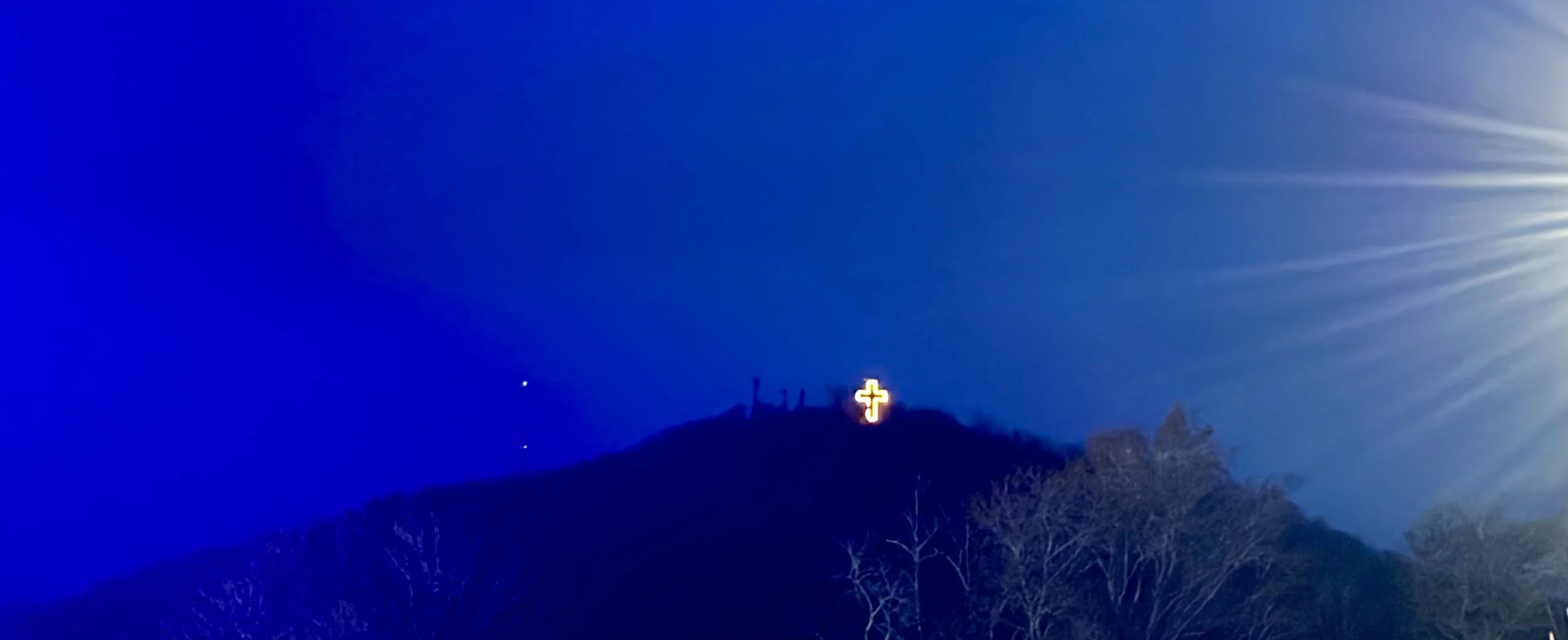
In daylight hours, a close look at Hibriten’s westernmost peak exposes what appears to be a disorderly, crisscrossed array of metal poles. But for two seasons each year, at nighttime, the nonsensical makes perfect sense. At Easter an illuminated cross atop the mountain serves as a reminder to the community of the death and resurrection of our Lord and Savior. And at Christmastime, residents below and folks just passing through on a nearby roadway are treated to a star shining brightly in honor of the birthday of Jesus. The annual lightings of the cross and star atop Hibriten are important symbols for a region steeped in faith and tradition.
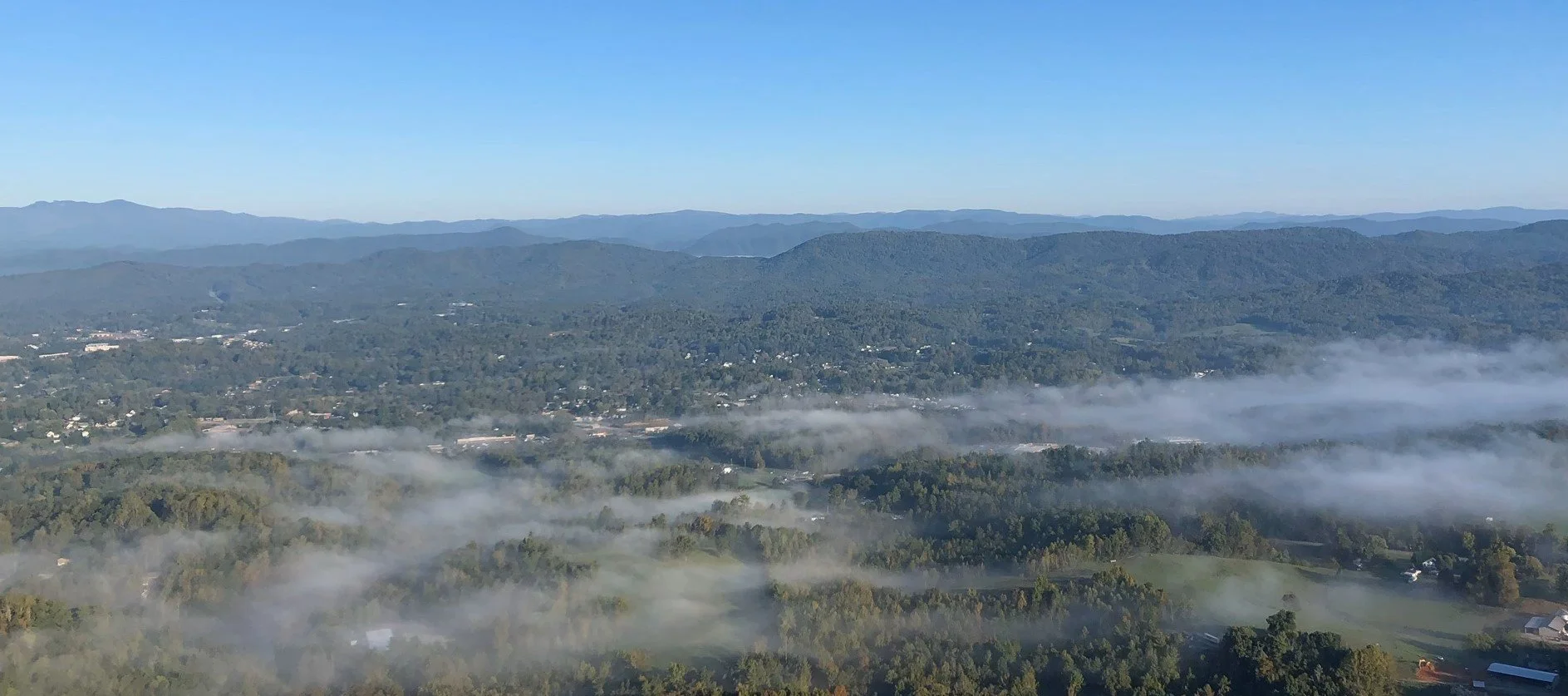
Hibriten Mountain has a rich, centuries-old history, and descriptive chronicles of these bygone years were providentially passed down to my siblings and me by our parents and grandparents. I remember stories of how a lookout tower was built on its peak in the 1920s to assist in the detection and prevention of forest fires and tales dating from the early 1900s when the mountain top boasted a wooden, two-story pavilion, built for hosting dance parties and community gatherings. Delving back even further in time, grown-ups told of a small cave on Hibriten’s northern-facing slope utilized during the War between the States as a hideout from Union soldiers and as a place to conceal valuables. But the shared anecdotes of my family’s long-ago overnight camping excursions on the mountain top, these narratives were my favorite.
Over the years, within the pages of our local newspaper, older members of the community shared their recollections of the name changes that Hibriten Mountain has undergone. Early settlers originally called this spot Turkey Cock Mountain because of the hordes of gobblers present. Later, in the mid-1800s, Miss Emma Baker, an immigrant to America from England, resided in the Lower Creek community of Caldwell County and taught at a local school. While here, she voiced her strong opposition to the name Turkey Cock, arguing it was an unsophisticated title for such a lovely spot. Reminding Miss Baker of a resort area near her home across the pond, she singlehandedly led the charge to scrap the name, Turkey Cock Mountain, and replace it with High Brighton Mountain. After a bit of tweaking by the locals, at some unknown point, this overtly British proper noun morphed into today’s entitle, Hibriten Mountain. (I want to posthumously express my personal gratitude to Miss Baker for her part in changing the name of this landmark. If not for her initiative, my high school diploma would announce to the world that I was a graduate of Turkey Cock High School. Instead, the document mercifully states that I graduated from Hibriten High School. I can only imagine the ridicule and embarrassment averted by Miss Baker’s bold move.)
I have fond memories of the first time I hiked to the top of Hibriten Mountain. Only ten years old, keeping pace on the upward climb with my father and older brother was a Herculean task. And even though this particular winter day was cool, I reached the summit out of breath, sweating, and in need of a big gulp of water from Daddy’s canteen. My scaling efforts were rewarded with a sweeping view below of the beautiful place I called home, and I quickly forgot the struggle to arrive at our local Camelot. After getting my bearings straight, I spotted my house, my paternal grandparents’ house, my elementary school, my church, and the high school I would one day attend. There would be other treks to this spot in my youth and adult years, but none surpassed the wonder and splendor of this first visit.
Although I haven’t lived in the area for decades, when I travel back to western North Carolina, one thing remains constant. I will forever consider this elevated place to be mine. And my separation from this prominent landmark by time or miles does nothing to erode this personal sentiment.
When looking up at this mountain, the same emotional responses surface: peace, serenity. comfort, contentment, inspiration, strength. Within a matter of minutes, physically, my heart rate and blood pressure both lower, and oftentimes, unexpected tears flow. Somehow, I’m transformed in its presence. It’s hard to describe. Perhaps a body has to have been raised in this neck of the woods to understand.
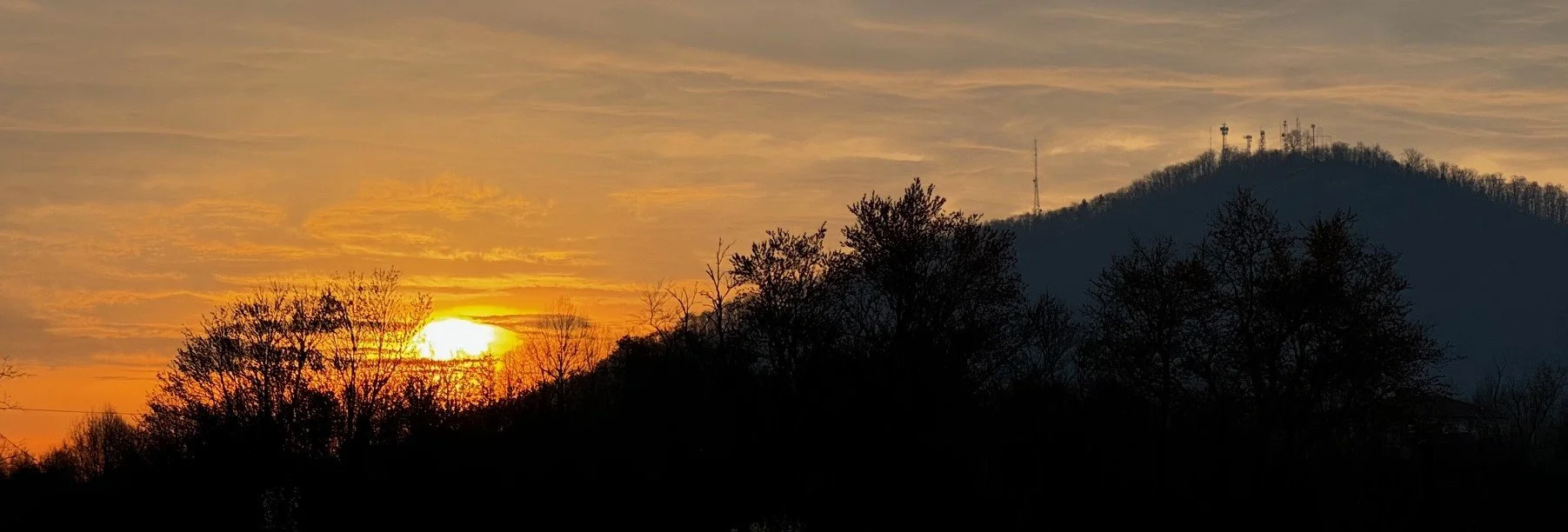
When in my hometown, at every turn, I find myself trying to catch a glimpse of Hibriten. I gaze humbly at the mountain and am aware of how infinitesimally small I am in the scheme of things. I gaze reflectively at the mountain and am reminded it was here long before I was born and will be here when I am gone. I gaze gratefully at the mountain and am connected with my roots and feel close to family and God. I gaze upwardly at the mountain and am cognizant that here, at its base, I am home.
Praise God, the maker of heaven and earth, for in His infinite wisdom, He created this mountain knowing His children would delight in the mountain’s existence in the joyful seasons of life and find comfort by its presence during times of sorrow.
Location, location, location.
Hibriten Mountain. Although it’s not a piece of property I will ever own, still forever in my heart, it’s…
My mountain.